Recentic is reader-supported. When you buy through links on our site, we may earn a commission at no extra cost to you.
For a lot of people, sleep tracking is the whole reason to buy a smart ring in the first place. You slip a small band on your finger, go to bed, and wake up to a tidy breakdown of how long you slept and how that time was split between light, deep, and REM sleep. It feels almost like having a tiny sleep lab on your hand. But how does a ring actually measure any of this, and how much should you trust the numbers? This guide explains what is happening under the surface, where the technology is genuinely useful, and where you should read the results with a healthy dose of caution.
The four sleep stages
Sleep is not a single flat state. Over the course of a night, your body cycles through several distinct stages, and most sleep trackers try to estimate how much time you spend in each one.
- Awake: brief periods of wakefulness, including the time it takes to fall asleep and short awakenings during the night.
- Light sleep: the transitional stage that makes up the largest share of a typical night and helps the body wind down.
- Deep sleep: the most physically restorative stage, associated with slower brain activity and physical recovery.
- REM sleep: the stage tied to dreaming and to memory and mood processing, when brain activity rises and the eyes move quickly.
How a smart ring estimates sleep
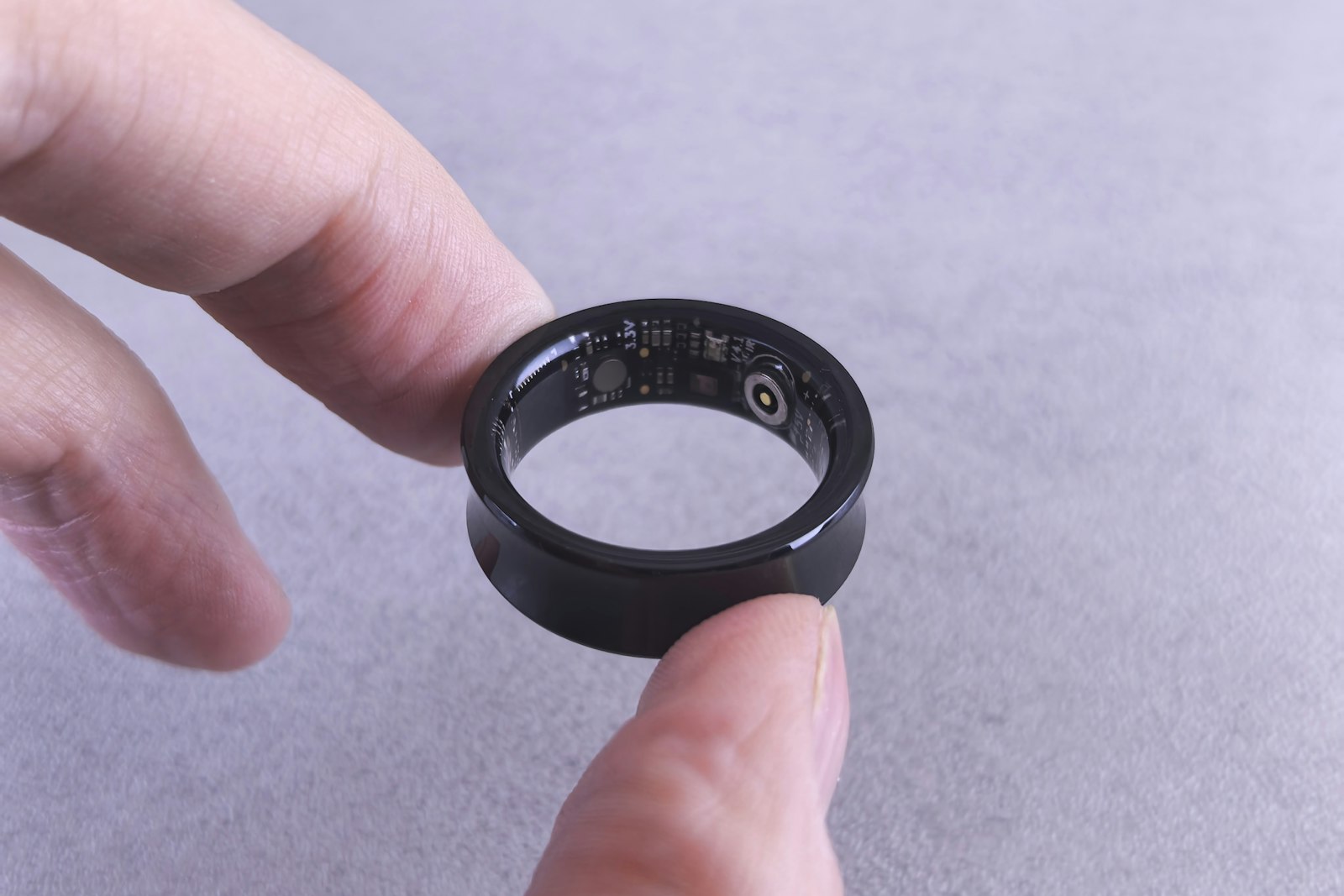
A smart ring does not read your brain. Instead, it gathers several body signals through the night and uses software to make an educated guess about what your sleep looked like. Most rings combine four main inputs.
- Accelerometer (movement): tracks how still or restless you are, since movement patterns differ across stages.
- Heart rate: your pulse tends to slow and steady during deeper sleep and shift during REM.
- Heart rate variability: the small differences in timing between heartbeats, which reflect how your nervous system is behaving overnight. You can read more in our guide to heart rate variability.
- Temperature: skin temperature shifts that follow your natural overnight rhythm.
Machine-learning models take all of these signals together and infer which stage you were likely in at each point of the night. The important word is infer. The ring is producing an estimate based on indirect clues, not a direct measurement of your brain. That distinction matters when you start comparing nightly stage percentages.
Why the finger has an advantage
The finger turns out to be a surprisingly good place to collect overnight signals, and in several ways it has an edge over the wrist. The blood vessels in your finger sit closer to the surface, so the optical sensors that read your pulse get a clearer signal. A ring also tends to stay snug and in place, while a watch can slide around or sit loosely on your wrist.
Motion is another factor. At night your hands generally move less than your wrists do as you shift and roll over, so a ring tends to pick up fewer motion artifacts that can muddy the data. The combination of a cleaner optical reading, a secure fit, and fewer disturbances is a big part of why so many people find rings comfortable and reliable for sleep compared to wrist devices. If you are weighing your options, our roundup of the best smart rings can help you compare fit and features.
How accurate is sleep stage tracking?
Here is the honest answer. Modern wearables are quite good at some things and noticeably weaker at others. They are generally reliable at telling whether you are asleep or awake, and at estimating your total sleep time across the night. Those are the numbers you can lean on the most.
Where they struggle is in precisely splitting your sleep into deep versus REM. Because the ring is inferring stages from indirect signals, the exact percentages can wobble from night to night and may not line up perfectly with what is really happening in your brain. The lab gold standard for measuring sleep stages is polysomnography (PSG), an overnight test that records brain waves along with other signals. No consumer ring replicates that level of measurement.
The practical takeaway is to treat the stage breakdown as an estimate and a trend rather than a precise readout. A single night that shows a little less deep sleep than usual is not cause for alarm. Patterns over weeks tell you far more than any one number.
What sleep data is actually useful for
Even with those limits, the data a ring collects can be genuinely helpful when you use it the right way. The real value lies in the big picture rather than in chasing perfect stage percentages.
- Spotting trends: watching how your sleep changes over weeks and months, not obsessing over one night.
- Consistency: seeing whether you keep regular bed and wake times, which is one of the most reliable habits for better rest.
- Behavior effects: noticing how things like alcohol or a late, heavy meal tend to show up in your overnight readings.
- Sleep duration: getting an honest sense of how much sleep you are actually getting versus how much you think you are getting.
Getting better data from your ring
The quality of your data depends a lot on how you wear the ring. A few simple habits go a long way.
- Get the fit and sizing right: the ring should sit snugly without pinching, since a loose fit lets the sensors lose contact and weakens the signal. Most makers offer a sizing kit, so use it before you commit to a size.
- Wear it consistently: the software gets better at reading your patterns the more nights it sees, so wearing it regularly produces more meaningful trends.
- Keep it charged before bed: a quick top up earlier in the day means the ring has enough battery to capture the whole night without dying partway through.
Frequently asked questions
Are smart rings accurate for sleep?
They are reliable at the basics, such as detecting whether you are asleep or awake and estimating your total sleep time. They are less precise when splitting sleep into exact deep and REM percentages, so those figures are best read as estimates and trends rather than exact measurements.
Is a ring better than a watch for sleep?
Many people find a ring more comfortable and steady for overnight tracking. The finger offers shallower blood vessels for a cleaner optical signal, a snug fit, and fewer motion artifacts than the wrist. The best choice still comes down to comfort, features, and how you plan to use the device during the day.
Can a smart ring measure deep sleep?
A ring estimates deep sleep by combining movement, heart rate, heart rate variability, and temperature, then running those signals through a model. It does not measure brain activity directly the way a clinical sleep study does, so treat its deep sleep figure as a useful estimate rather than a precise reading.
The bottom line
A smart ring is a comfortable, capable tool for understanding your sleep, especially when you focus on the big patterns. Lean on it for total sleep time, consistency, and long-term trends, and take the exact stage percentages with a grain of salt. Used that way, the ring becomes a helpful nudge toward better habits rather than a source of nightly anxiety.
Last updated: June 2026. Recentic is editorially independent. Wearables are not medical devices and cannot diagnose, treat or prevent any condition; consult a healthcare professional for medical concerns.