Recentic is reader-supported. When you buy through links on our site, we may earn a commission at no extra cost to you.
More people than ever are reaching past period-tracking apps and turning to wearables to understand their menstrual cycle. A growing number of smart rings now promise to estimate where you are in your cycle, predict your next period, and flag a likely fertile window, all from a small sensor on your finger. The method behind this is temperature tracking, and it is genuinely useful for awareness and family-planning support. It also has real limits. This guide explains how the temperature method works, what a smart ring can and cannot tell you, and the one boundary that matters most: a smart ring is not birth control.
How temperature reveals your cycle
Your body temperature is not flat across the month. It shifts in a pattern that follows your menstrual cycle. After ovulation, the hormone progesterone rises, and one of its effects is a small, sustained increase in your resting body temperature. That rise is subtle, but it is consistent enough that it has been used for cycle awareness long before wearables existed.
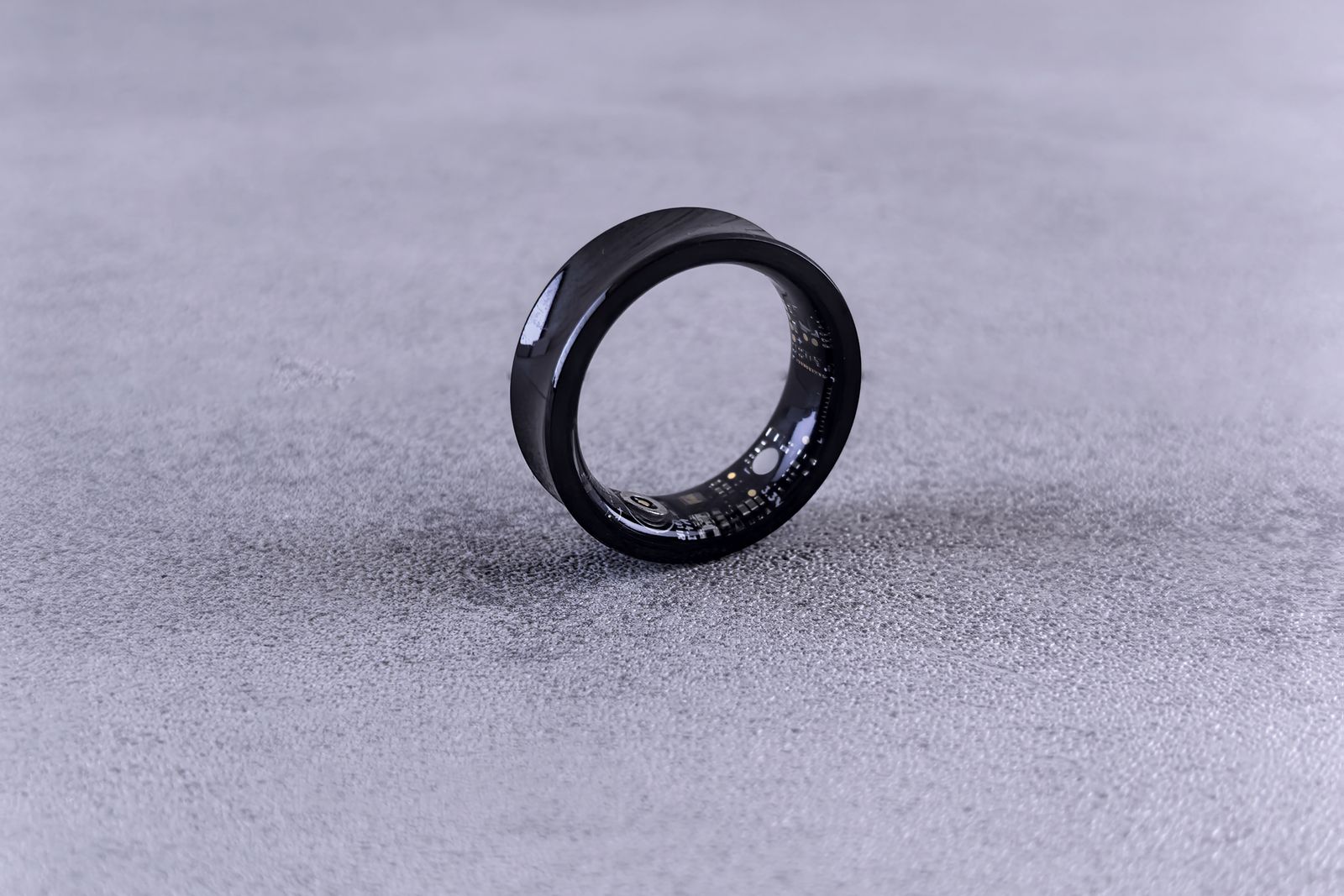
Smart rings pick up on this by measuring skin temperature continuously while you sleep. Rather than reporting an absolute number, they track your temperature relative to your own personal baseline. Because the sensor sits in close contact with the skin overnight, it can detect very small changes, on the order of a tenth of a degree Celsius. Those tiny shifts are what allow the software to spot the post-ovulation rise and map out the phases of your cycle.
What a smart ring can estimate
From these temperature trends, combined with the dates you log, a companion app can estimate several useful things:
- Cycle phase: roughly where you are in your cycle on a given day.
- A predicted fertile window: the range of days when conception is more likely, based on your historical pattern.
- Upcoming period predictions: an estimate of when your next period is likely to start.
These estimates are not fixed on day one. They improve as the app learns your individual pattern over several cycles. Early predictions are a rough sketch, and they sharpen as more data comes in. Even then, they remain estimates based on past trends, not guarantees about the current cycle.
Why the finger and overnight matter
The placement and timing of the measurement are a big part of why rings work well for this. Skin temperature taken from the finger during sleep is far more stable than a reading you might take during a busy day. Daytime temperature is pushed around by movement, meals, stress, room temperature, and clothing, so it makes for a noisy signal.
Overnight, your body settles into a calmer state, and the finger gives a consistent point of contact. The result is a cleaner signal that makes the small post-ovulation rise easier to detect. This is also why a ring can outperform a wrist-worn device for this specific purpose, since the finger tends to track core temperature trends more reliably during sleep.
Important: this is not birth control
This is the part to read carefully. A smart ring is not contraception. The cycle insights it provides are designed for awareness and family-planning support, not for preventing pregnancy.
There is an important distinction here. Some apps are specifically cleared for use as contraception, such as Natural Cycles, which Oura can feed temperature data into. In that arrangement, the regulated, cleared component is the app, not the ring. The ring is a sensor that supplies data. Apps cleared for contraception are a separate, regulated product with their own rules, and even they carry a failure rate. Natural Cycles, for example, reports its method as roughly 93 percent effective with typical use and up to 98 percent with perfect use, which means it is not foolproof. No method of birth control is perfect.
Never rely on a smart ring alone to prevent pregnancy, and never rely on it alone to achieve pregnancy. If you are making decisions about contraception or conception, talk to a healthcare professional and use a method that is actually intended and cleared for that purpose. Treat your ring’s cycle data as helpful background information, not as a contraceptive tool.
Other things temperature can flag
The same sensitivity that picks up cycle changes can pick up other signals too. A rise in your overnight skin temperature can also mark the early onset of illness, before you fully feel sick. Because of this, cycle tracking and illness detection overlap, and a temperature change that looks unusual for your cycle may sometimes reflect a cold, an infection, or another stressor on your body rather than ovulation. Many apps account for this, but it is worth remembering that temperature is one signal with several possible causes.
Which rings do this
Two names come up most often for cycle and temperature features. Oura is well known for its temperature-based cycle insights and offers an optional integration with Natural Cycles, the separately cleared contraception app mentioned above. Ultrahuman also tracks temperature and provides cycle-related features. Both rely on the same underlying principle of measuring overnight skin temperature against your personal baseline.
If you are weighing your options, it helps to compare hardware, comfort, subscription costs, and how each app handles cycle data. See our roundup of the best smart rings for the current picks, and our head-to-head on Oura vs Ultrahuman if those two are on your shortlist.
Frequently asked questions
Can a smart ring predict ovulation?
A smart ring can estimate a fertile window and detect the temperature rise that follows ovulation, which means it confirms that ovulation has likely occurred rather than predicting the exact moment in advance. Its predictions for upcoming cycles get more accurate as the app learns your pattern over several months, but they remain estimates based on past trends.
Can I use a smart ring as birth control?
No. A smart ring is not contraception and should never be used on its own to prevent pregnancy. The only regulated path is a separately cleared app, such as Natural Cycles, that can use ring data as one input, and even cleared methods have failure rates and specific rules. For contraception decisions, speak with a healthcare professional.
Which smart ring is best for cycle tracking?
Oura and Ultrahuman are the two most established choices for temperature and cycle features. Oura also offers an optional integration with a cleared contraception app, while both provide cycle phase and period predictions. The best choice depends on comfort, subscription cost, and which app experience you prefer.
The bottom line
A smart ring is a capable tool for understanding your menstrual cycle. By tracking small overnight changes in skin temperature against your own baseline, it can estimate your cycle phase, suggest a fertile window, and predict your next period, with accuracy that improves over time. Used for awareness and family-planning support, it can be genuinely helpful. Just keep the boundary clear: the ring informs you, but it does not protect you. For anything involving contraception or conception, rely on a cleared method and the guidance of a healthcare professional.
Last updated: June 2026. Recentic is editorially independent. Wearables are not medical devices and cannot diagnose, treat or prevent any condition, and they are not a form of contraception; consult a healthcare professional for medical and family-planning decisions.